
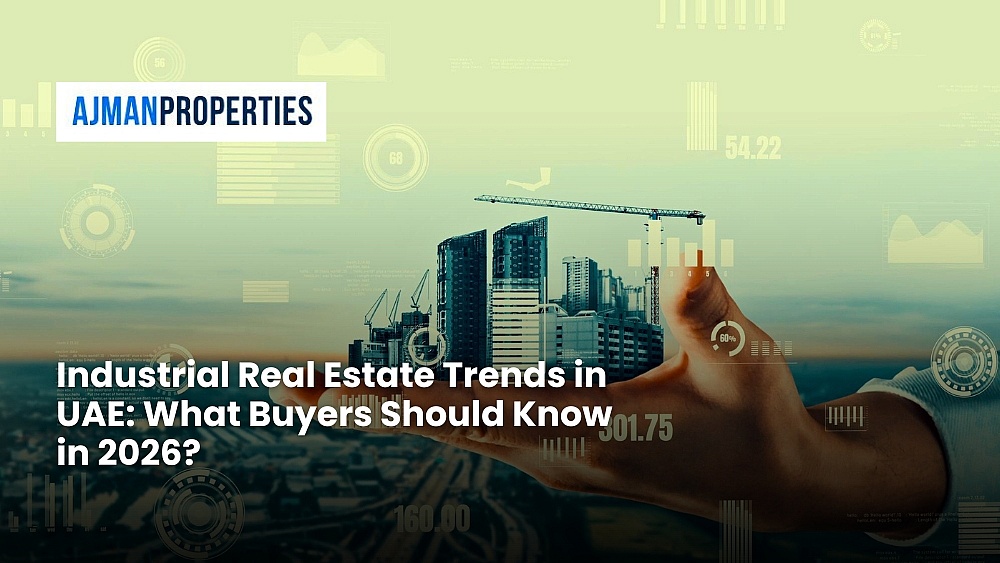
The industrial real estate business in the UAE has reached a new strategic development stage. Industrial properties are no longer considered secondary investments, but due to economic diversification, restructuring of the supply chain, and industrial efforts that are supported by the government. Some of the most in-demand assets in the country are warehouses, logistics hubs, and manufacturing facilities in 2026. These changes are vital for understanding among buyers who wish to make better decisions geared towards the future.
Here are some Key Factors to Consider Before Buying Industrial Land in Ajman
The Changing Role of Industrial Property in the UAE
The UAE industrial real estate has developed much further than the use of storage and factories. It is currently used in logistics development, light industry, cold storage, data processing, and the last-mile delivery. This change can be seen as an indication of the efforts of the country to focus on the non-oil sector and establish itself as a trade and logistics hub in the world.
Government initiatives such as industrial localization, export growth programs, and smart manufacturing policies have directly influenced Real Estate Trends in UAE 2026, making this asset class more resilient and strategically important than ever before.
Strong Demand Driven by Logistics and E-Commerce
Logistics expansion is one of the largest sources of demand in 2026. The further development of e-commerce, local delivery, and cross-national trade has acutely increased the demand for modern industrial areas.
Key demand factors include:
● Same-day and the next day delivery needs.
● Expansion of the third-party logistics (3PL) providers.
● Increasing demand for temperature-controlled warehouses.
● Creation of trade import and export using the UAE ports.
Buyers are also focusing on highways, ports, and airports as their preferred location for properties to minimize delivery and operational expenses.
Shift Toward Grade-A Industrial Facilities
Old-fashioned types of industries are being slowly supplanted by new, custom-built plants. Both in 2026, Grade-A industrial properties that are of international quality are highly preferred by buyers.
Features in high demand:
● High ceiling heights
● Heavy floor load capacity
● Smart loading docks
● Energy-efficient designs
● Adherence to fire and safety.
This has increased the pricing difference between the old stock and the new developed industrial assets, and the success has been given to purchasers who invest in quality infrastructure.
Rising Popularity of Free Zones and Specialized Clusters
Free zones still have a significant influence on the demand in industrial real estate. Such regions as JAFZA, KEZAD, and industrial zones in Ajman and Sharjah have flexible ownership, tax benefits, and streamlined licensing.
There are also industry-specific clusters that are on the rise, such as:
● Food processing zones
● Manufacturing centers in the pharmaceutical industry.
● Car and spare parts clusters.
● Technology and light-assembly parks
Such targeted ecosystems drive lower levels of operational friction and increase the demand for tenants in the long term.
Land Scarcity and Strategic Location Premiums
The supply of industrial land is decreasing, especially in strategic logistics locations. This makes strategic plots and facilities sell at high prices.
Buyers are increasingly competing for properties that offer:
● Direct highway access
● Closeness to ports and airports.
● Zoning of several industrial applications.
This scarcity factor is a key element shaping the top Industrial Real Estate Trends in the UAE, especially for long-term investors focused on capital appreciation.
Rental Growth and Yield Stability
Industrial real estate has been very resilient in terms of rental as opposed to other property segments. The rental rates of high-quality warehouses and logistics units in 2026 are in an ascending trend, with low vacancy rates underpinning the trend.
The reason why investors prefer industrial assets:
● Long lease terms
● Lower tenant turnover
● Predictable cash flows
● Reduced maintenance costs
To buyers, this implies that industrial real estate provides protection against inflation as well as income protection.
Sustainability and Compliance Becoming Non-Negotiable
Regulatory compliance and environmental compliance are no longer an option. The buyers also have to look at the sustainability levels in the evaluation of the industrial properties.
Some of the compliance trends are:
● Green building mechanisms.
● Recycling and waste management facilities.
● Solar panel integration
● Construction practice that is ESG-related.
The properties that do not comply with them can be subjected to low demand, low prices or greater retrofit expenses in the future.
Technology Integration in Industrial Spaces
The adoption of smart technology is increasing at a rapid pace in the industrial sector. In 2026, customers are becoming more interested in properties that are conducive to automation and digital activities.
Popular integrations are:
● Warehouse management system (WMS) compatibility.
● Smart security and surveillance.
● Automated loading and sorting.
● Smart energy management
They can increase the efficiency of the operation and appeal the properties to high-quality tenants.
Financing and Buyer Profile Evolution
There is also a changing buyer landscape. Besides the traditional investors, other investors in the market are:
● Institutional funds
● Family offices
● End-user businesses
● Logistics companies on a regional level.
Banks and other financial institutions are becoming more comfortable in terms of real estate investment in the UAE, where they are willing to provide structured financing to those buyers who have good business plans.
Risks Buyers Should Carefully Evaluate
Even though industrial real estate has a bright future, it does not lack risks. Before committing, buyers have to do due diligence.
Key considerations include:
● Zoning and restrictions of use.
● Infrastructure capacity
● Liquidity exit points in the trading centres.
● Adherence to new rules and regulations.
Understanding broader real estate trends in the UAE helps buyers mitigate these risks and align investments with national development priorities.
What does this mean for Buyers in 2026?
Industrial real estate in the UAE is no longer a niche segment, but it is a mainstream part of the real estate market. Buyers whose concerns revolve around the location quality, contemporary specifications, regulatory compliance, and long-term drivers of demand are in the most ideal position to benefit.
Strategic planning is now a rewarding factor in the sector instead of speculative purchasing, and informed decision-making has never been as significant. For more information about properties in Ajman, visit the official Ajman Properties website.
Frequently Asked Questions
1. Is industrial real estate a good investment in the UAE in 2026?
Yes, strong demand, rental stability, and economic diversification make industrial real estate a solid long-term investment.
2. Which locations are most popular for industrial properties?
The greatest demand is observed in the areas surrounding ports, highways, and free zones because they are the most efficient in terms of logistics.